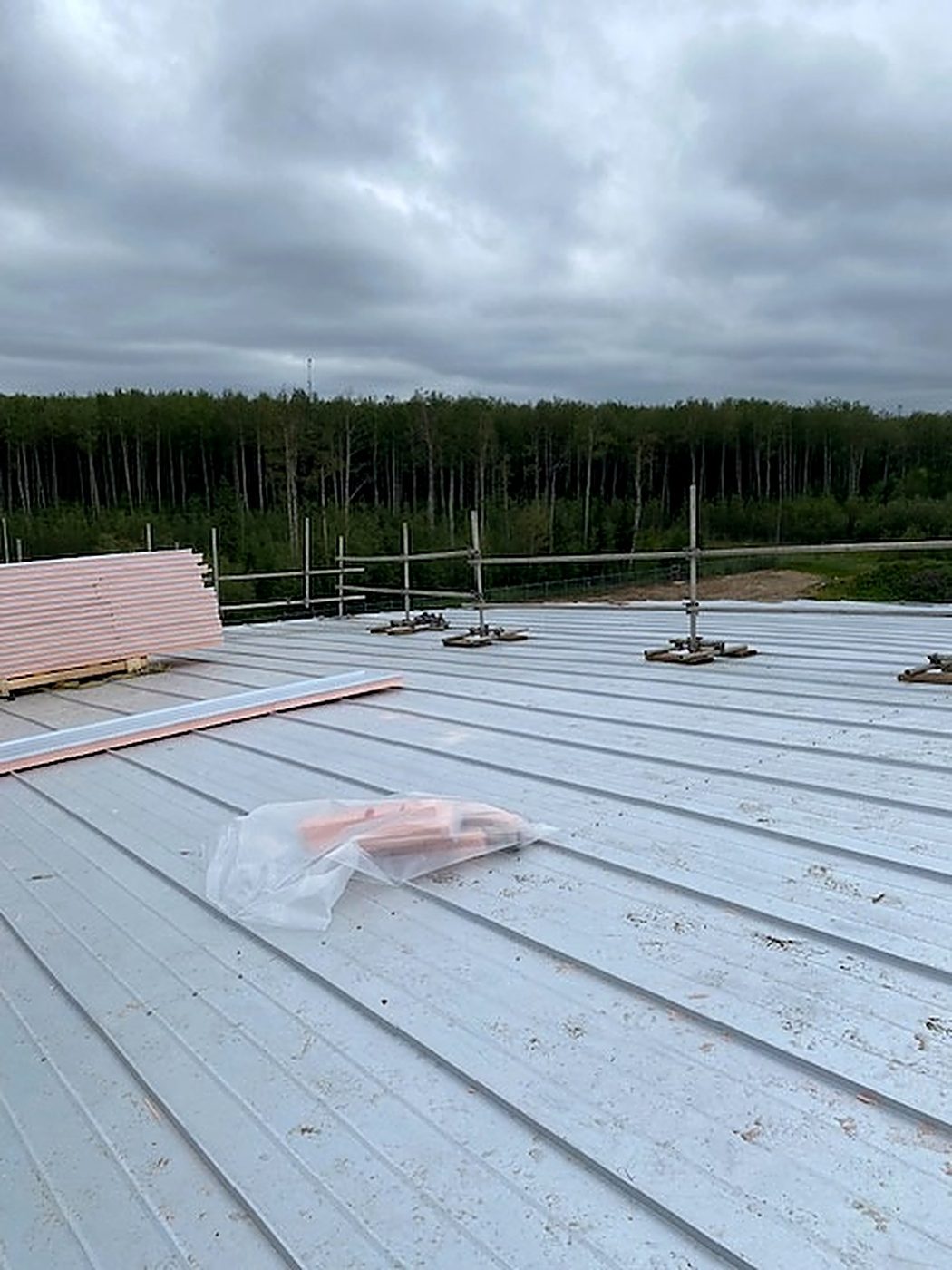
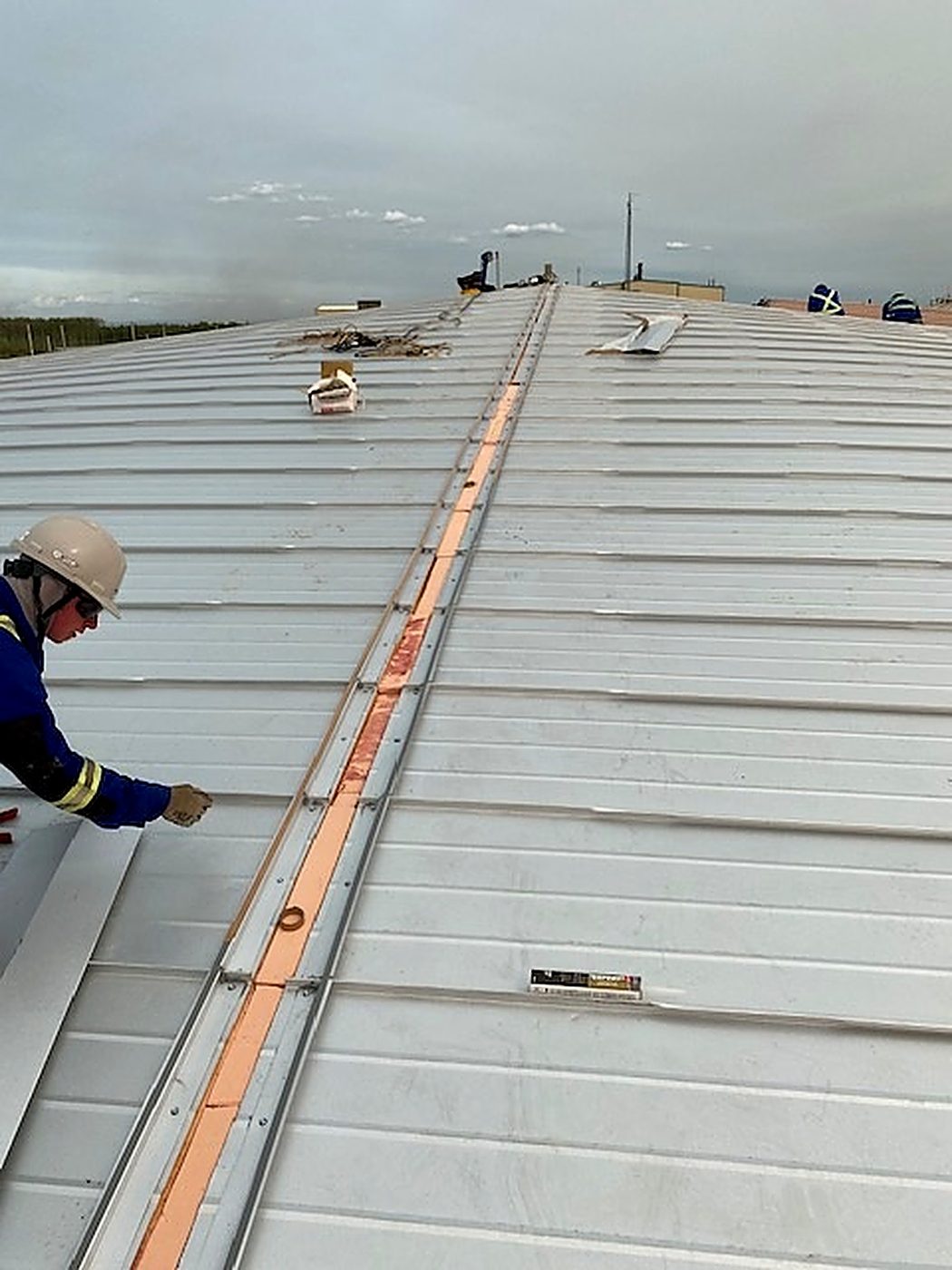
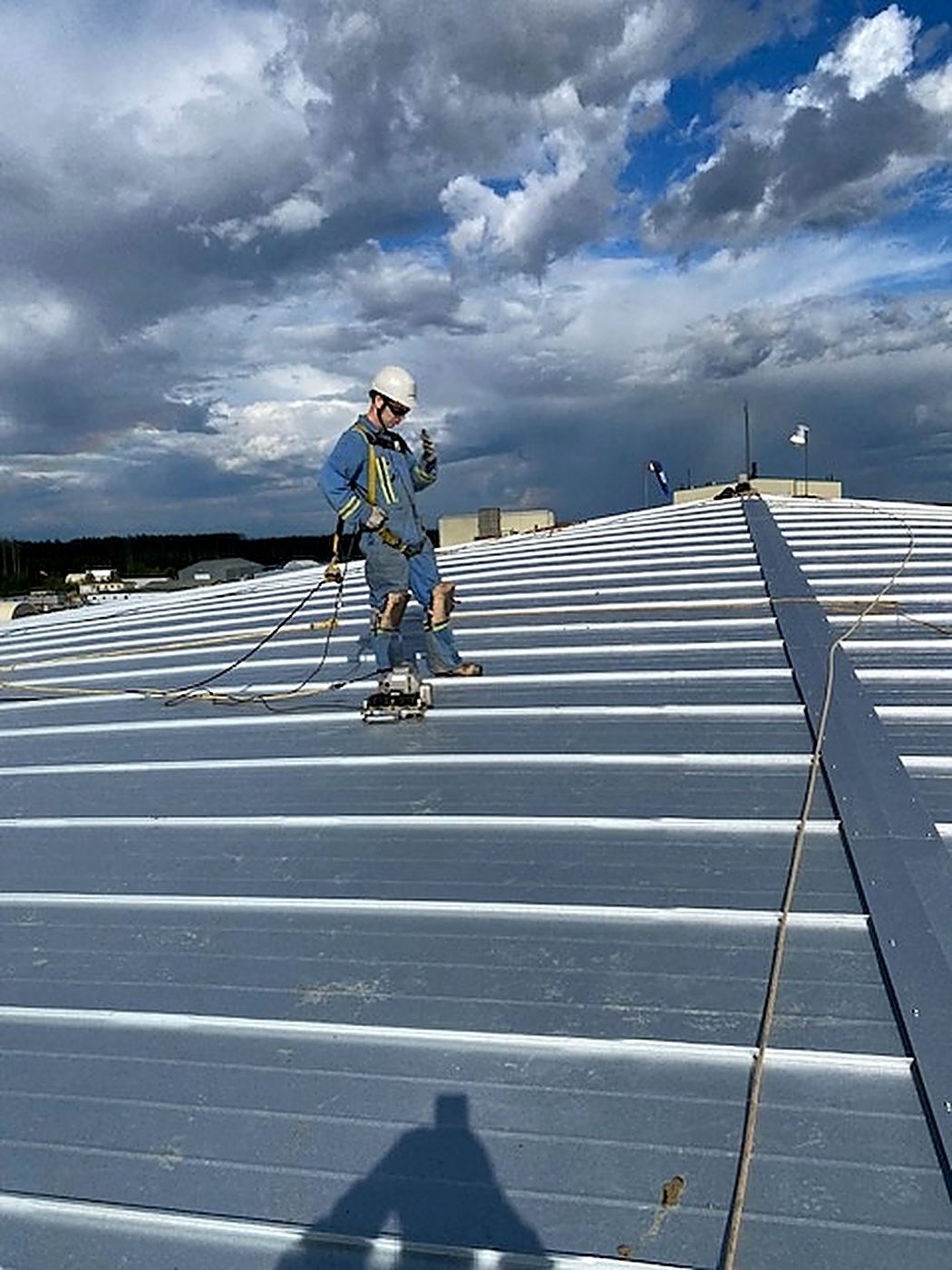
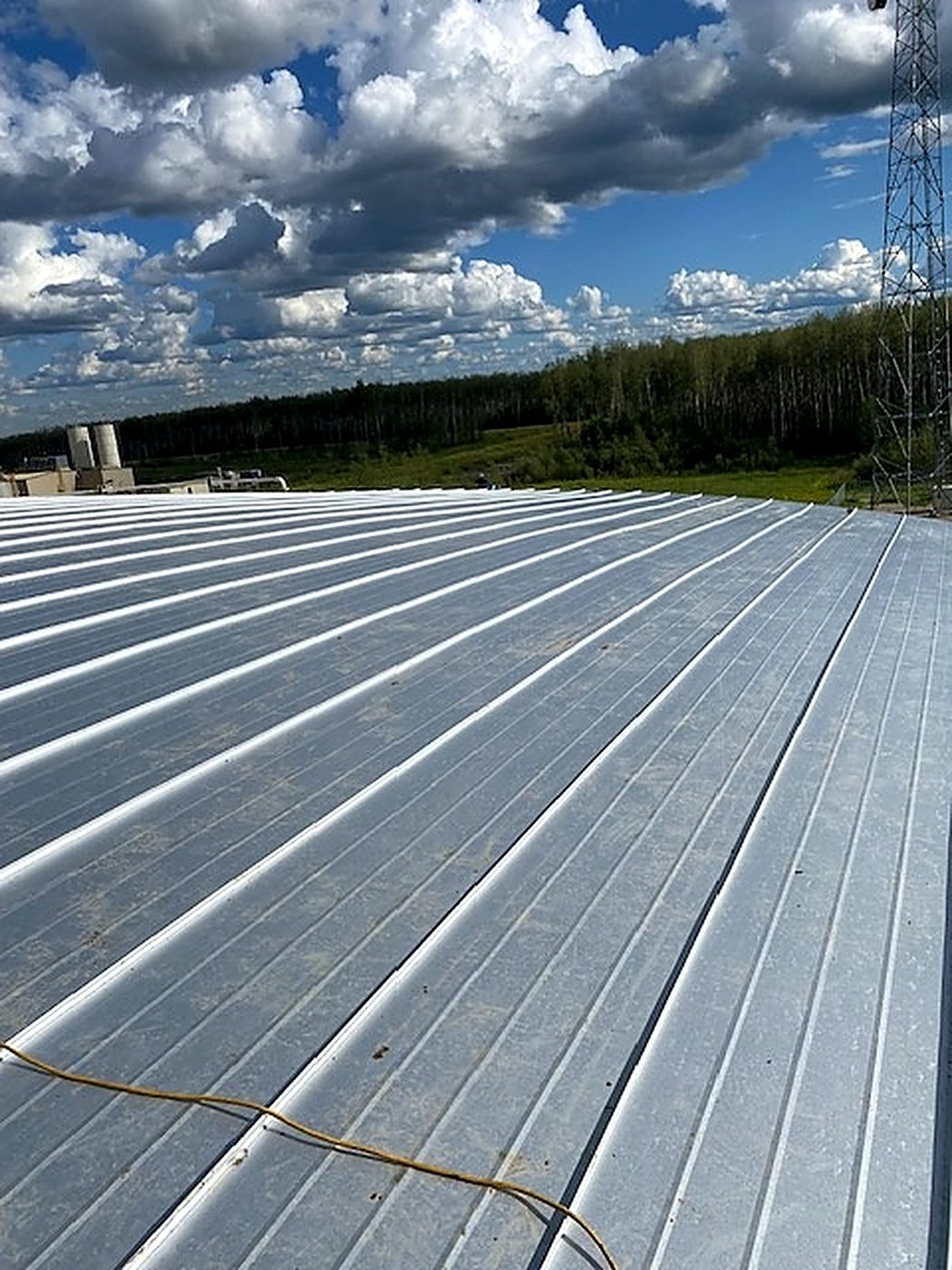
Project type: field-erected storage tank at an operating industrial site in Alberta. Scope: full roof re-clad — the existing lap-and-fastener jacketing came off, and a standing-seam system went on. Every photograph on this page is from the project record.
Scope
| Parameter | Value |
|---|---|
| Existing jacketing | Corrugated lap-and-fastener metal panels |
| Condition found | Water ingress at the laps, saturated insulation, roof-plate corrosion under jacketing still in place |
| New system | Galvalume standing-seam panels over high-temperature polyiso insulation |
| Seam closure | Mechanically folded, closed with a powered seamer |
| Exposed fasteners in panel field | None |
| Completed | 2026 |
What the Lap System Allows
A lap system seals by overlap. Each panel lies flat on the next, and a fastener pulls the two faces together. That geometry puts an open horizontal edge at every overlap, across the entire roof. Wind loads those edges. Water tracks through them. Every exposed fastener is a penetration through the weather face, and thermal cycling works fasteners loose over years of service.
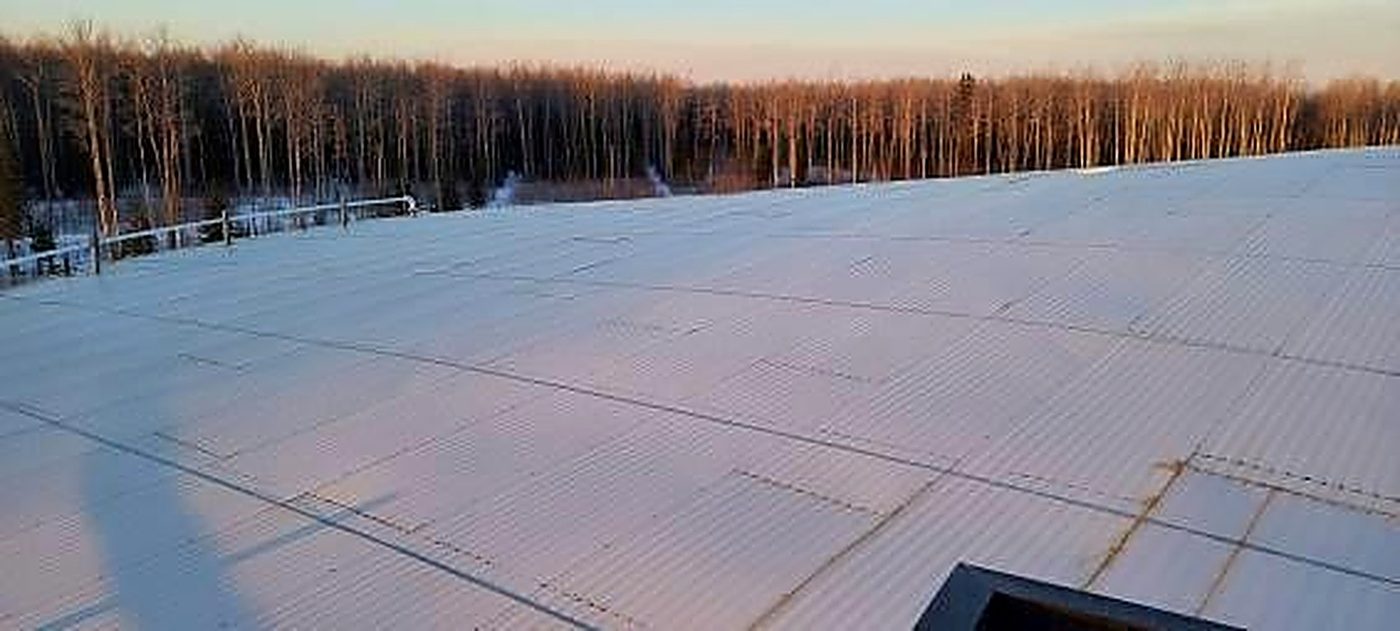
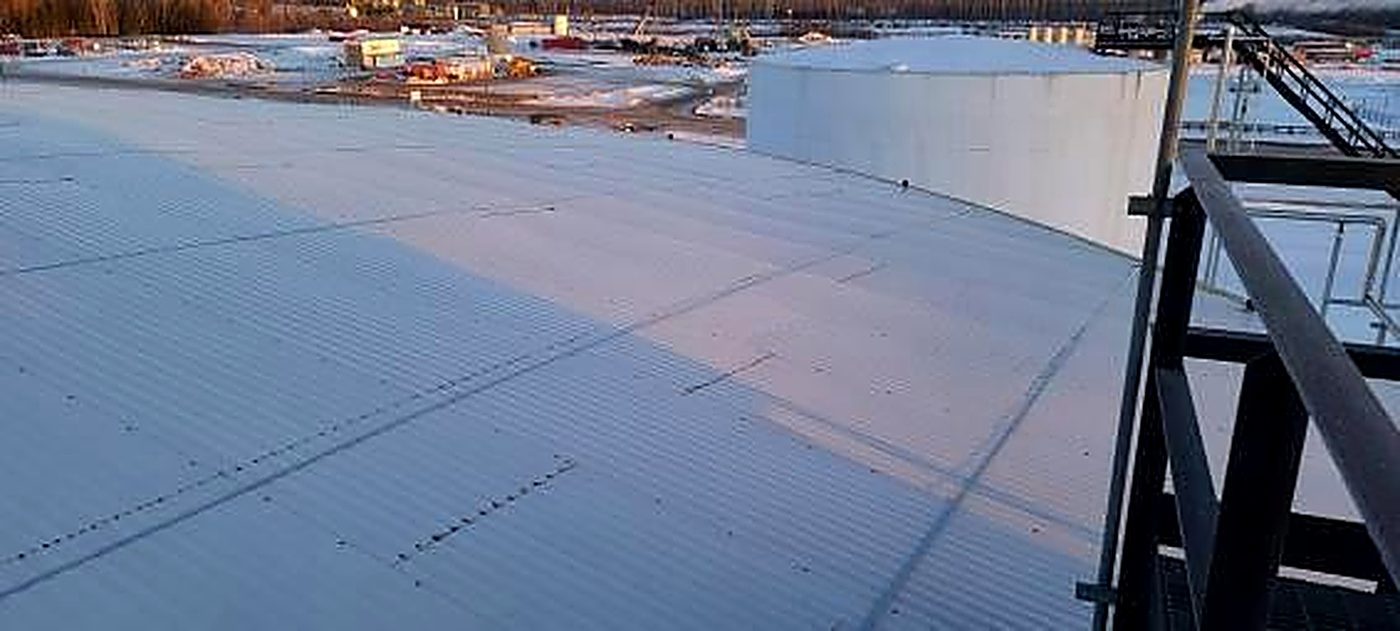
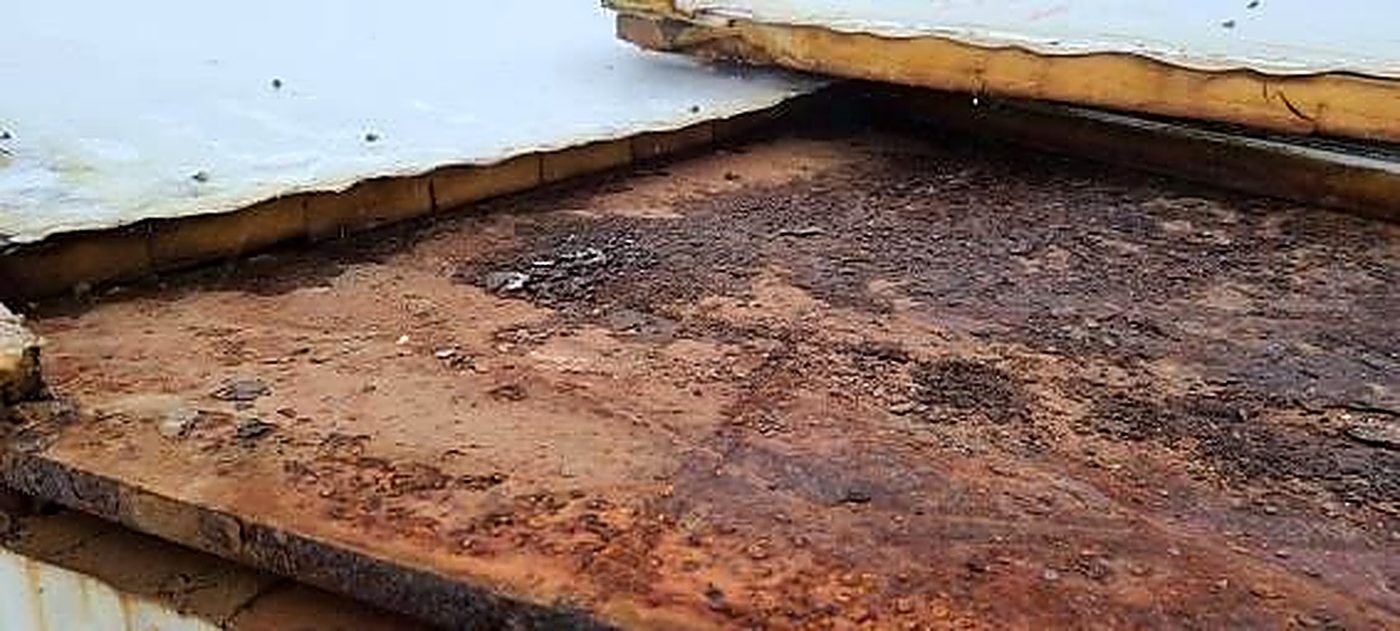
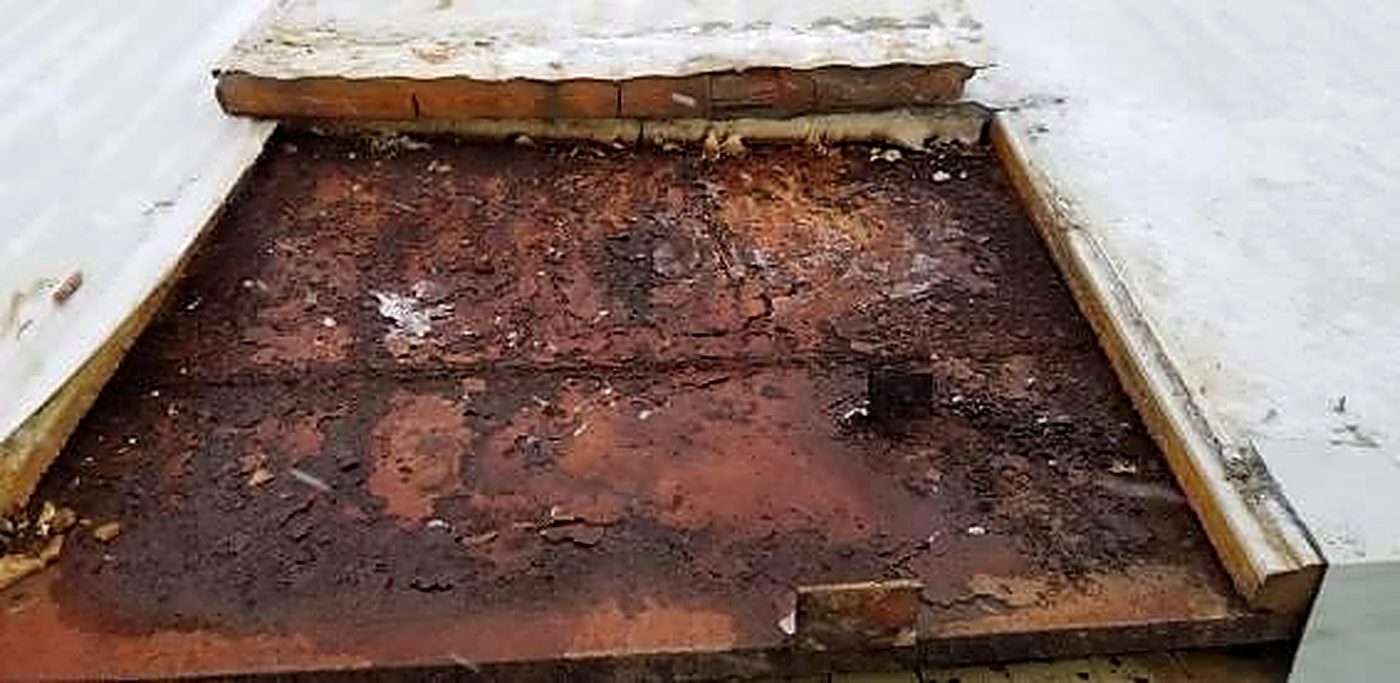
The last two photographs are the important ones. From the walkway this roof read as weathered but intact. Under the laps, the insulation was wet and the plate was corroding. That failure mode has a name — corrosion under insulation — and on a lap system it is a design property, not a maintenance lapse.
The Replacement System
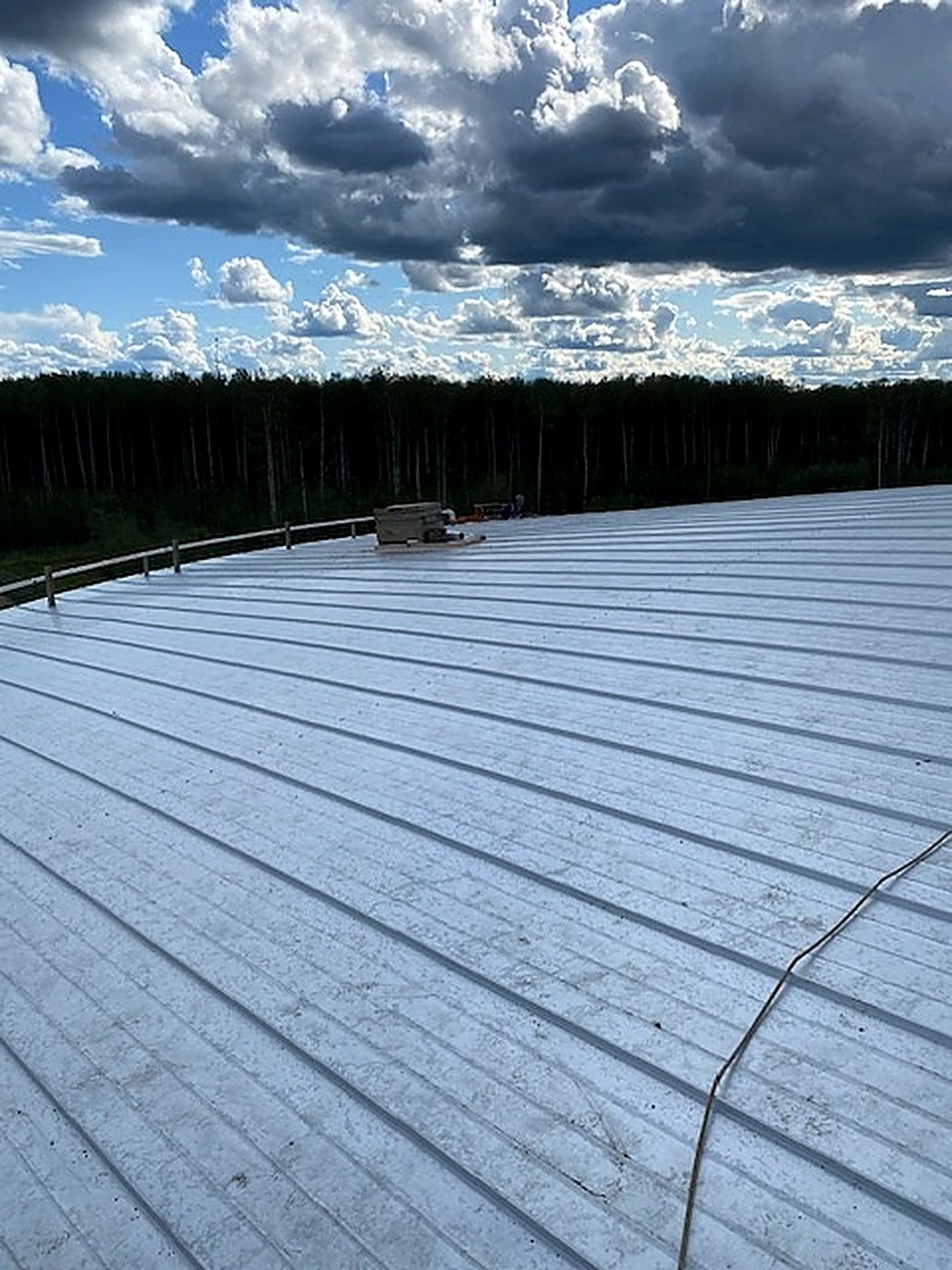
Galvalume standing-seam panels over a high-temperature polyiso core. The seam does the sealing. Panel edges rise above the drainage plane and fold together into a mechanical lock, so water moving across the roof never sits on an open joint. Panels run continuous — no mid-run laps. There are no exposed fasteners in the panel field, which means nothing to back out and no penetrations through the weather face.
Outcome
The roof now presents a continuous metal surface with mechanically locked seams standing above the drainage plane. The open laps, the exposed fasteners, and the penetrations shown in the before photographs no longer exist on this roof. The insulation core is specified for the tank's operating temperature and sealed inside the envelope.
What this project demonstrates
A lap-jacketed roof at the end of its service life can be re-clad in place with a standing-seam system. The failure paths in the before photos — open laps, loosening fasteners, wet insulation, plate corrosion — are properties of the lap geometry. The standing seam removes them by geometry, not by maintenance.
Note: project details published with the operator's identity withheld. Named version available on request from procurement or engineering teams evaluating the system.